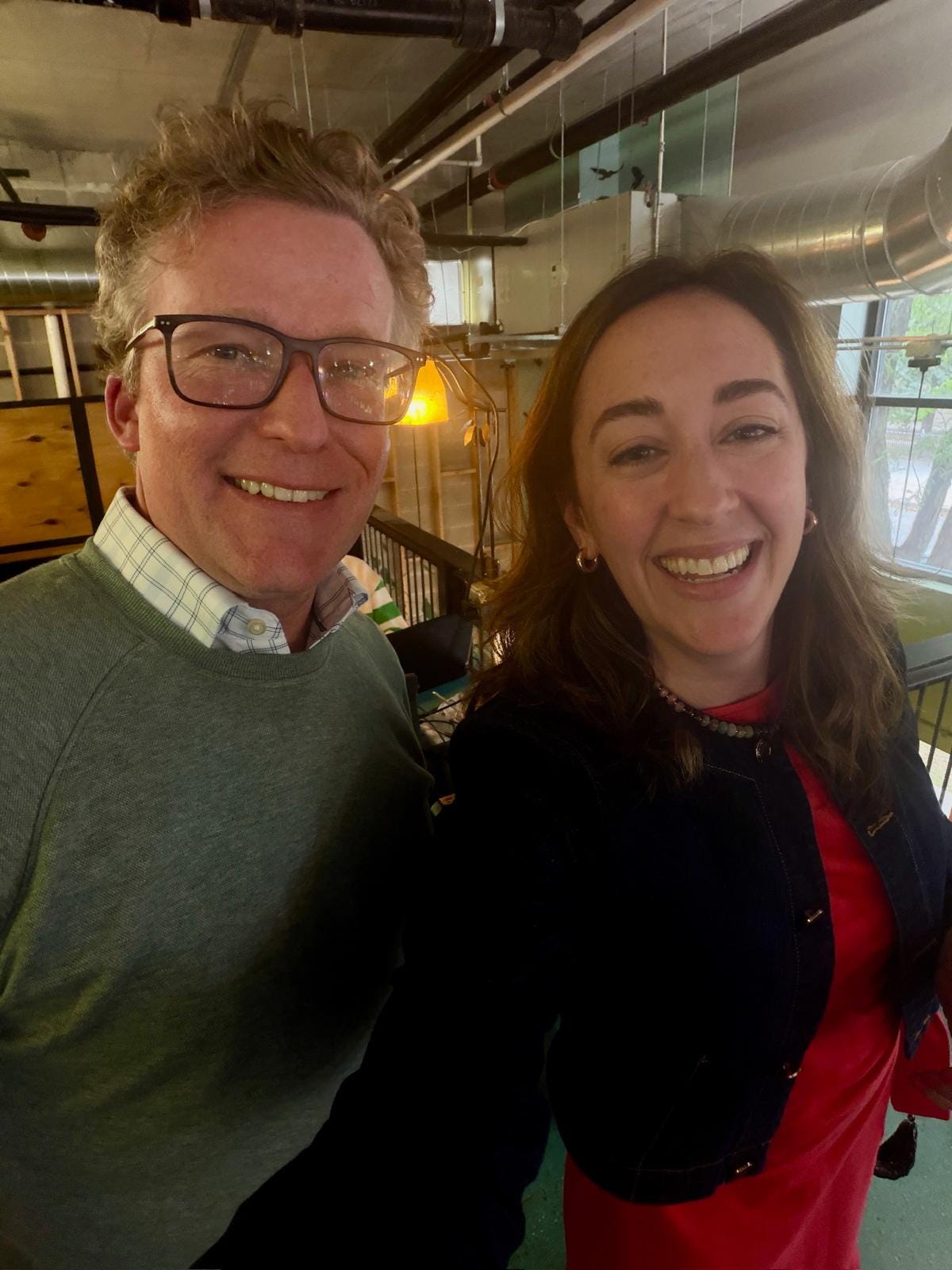
We’re excited to announce our lead investment in Kodiact’s Pre-Seed round. Kodiact is building a decision intelligence layer for direct materials, including the ingredients, packaging, and components that go into every product a manufacturer makes. It sits on top of existing systems like SAP and Microsoft, ties live market signals to product-level margin at risk, and transforms category strategies from static to dynamic.
The Problem: Manufacturers Are Managing Their Biggest Cost With Their Oldest Tools
Costs have become harder to predict since 2020, from tariff swings to climate-driven crop failures and repeated supply shocks. Raw-material risk has become such a critical item that it is a frequent board-level conversation.
Why is this? For food manufacturers, materials are the biggest cost on the P&L, and recent instability has impacted their bottom lines. For instance, in 2025, the U.S. tariffs on imported steel and aluminum doubled. Food and beverage companies felt it right away; Constellation Brands projected a roughly $20M hit from aluminum tariffs (Bloomberg), and Campbell’s reported it couldn’t fully offset tariff costs on the steel used for its cans (Food Dive).
The challenge is that most procurement software was built around indirect spend (office supplies, software, and travel), which is easy to standardize. Direct materials are different; prices move with volatile commodity markets, and long-term supplier contracts limit how quickly a buyer can change.
As a result, sourcing decisions still run on spreadsheets and disconnected market reports, and category strategies are refreshed just once a year. When a senior buyer retires, they take years of implicit knowledge with them. Chief Procurement Officers raised this repeatedly during our diligence calls, and it shows up in the data: in Deloitte’s 2025 Global CPO Survey, 34% of CPOs ranked the talent gap as a top barrier to delivering value (Deloitte).
The Solution: A Dynamic Category Strategy, Built on a Company’s Own Data
What is interesting about Kodiact is that it does not replace the ERP (enterprise resource planning) system. It replaces the patchwork of spreadsheets, market reports, and consulting that sits around it. The foundation is Kodiact’s Canonical Material Data Model, which covers more than 500 raw materials across 23 categories. On top of it, the platform does three things:
Reads the market: Tracks commodity prices, news, and regulatory signals in real time and ties each one to the categories it affects.
Grounds in real company data: Anchors every recommendation in the customer’s own bill of materials, contracts, suppliers, and strategies, in a single-tenant environment that never trains on customer data.
Synthesizes and acts: Delivers a daily brief, ranked actions, and quantified margin at risk, with AI agents that draft RFQs and run supplier outreach in a bounded “propose mode” that keeps buyers in control.
We find Kodiact’s Decision Trace Graph to be a key differentiator. It records every decision, override, and negotiation step, along with its outcome. Over time, that turns individual buyer expertise into an institutional asset that stays with the company, makes recommendations sharper with use, and helps junior buyers ramp faster. As AI models become commoditized, a company’s record of its own decisions becomes even more valuable.
The Market: Starting in Food, Built for Any Industry
The global procurement software market is estimated at $10.9B in 2026 and projected to reach $21.3B by 2033 (Grand View Research). Spending intent is rising too. In the same Deloitte survey, CPOs reported putting about 20% of their budgets toward procurement technology, nearly double the share in 2023 (Deloitte). Kodiact displaces the consulting and manual category-management work of today.
Kodiact’s initial focus is the food and beverage industry, where commodity volatility is high, bills of materials are complex, and margins are thin. The same data model extends to other industries with heavy raw-material exposure, including cosmetics, packaging, chemicals, and industrial manufacturing. Pricing is per commodity, not per seat, so each customer relationship can grow as Kodiact covers more of what it buys.
The Team: 25 Years Inside the Problem
Kodiact was co-founded by Steve Tucker and Dan Daehler, who have worked together for 25 years. The duo built a procurement consultancy to 60 people in eight countries before selling it to an SAP partner, then helped build an AI contract-management company acquired by DocuSign. Their relationships across the largest food and consumer goods manufacturers give Kodiact a head start that’s hard to buy.
Steve began his career trading cocoa at Mars and traded wheat, sugar, and cocoa on London’s commodity exchange for customers including Nestlé and Cadbury. He most recently led sales at Evisort ahead of its acquisition by Workday. Dan started as a purchasing and sourcing consultant at Kearney focused on consumer goods, and has since held senior roles at software companies in contract management and procurement.
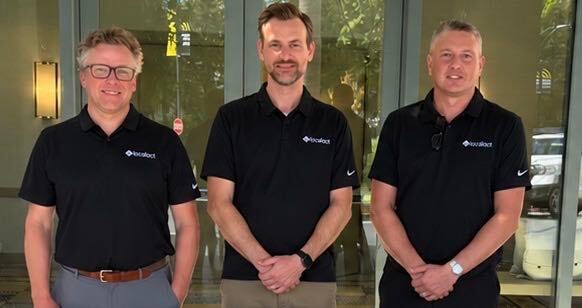
They are joined by CTO Jonathan Lee, a former founder and AI engineer who has built production multi-agent systems and enterprise-scale architectures. They’re advised by Ray Smith, CVP at Microsoft, who leads the Agent 365 program.
Thesis Alignment: Supply Chain Resilience Starts With Better Decisions
At Supply Change Capital, we invest in technology that makes the food system more resilient, transparent, and healthy. Kodiact sits squarely in our supply chain resilience thesis. Better raw-material decisions at the largest food companies ripple across the food system. When manufacturers can see risk earlier and spread their sourcing across more suppliers and origins, they’re less exposed to the climate shocks, crop failures, and trade disruptions that have destabilized food supply chains since 2020. Kodiact also gives procurement teams the data to weigh sustainability in sourcing decisions.
With this round, Kodiact will expand its data and simulation capabilities, convert its first enterprise pilots into deployments, and build partnerships across industries with high raw-material spend. We’re proud to lead this round alongside Green Circle Foodtech Ventures and The Velocity Catalyst Fund, and to back a team building the decision layer that direct materials have been missing.